

Technology is transforming pet care. Smart devices can help owners locate missing animals, manage feeding schedules, encourage exercise, monitor behaviour, and remain connected with their pets while away from home.
However, not every connected gadget is essential. The best smart pet device is one that solves a genuine problem without compromising the animal’s comfort or safety. Technology should support responsible pet ownership—not replace exercise, companionship, appropriate nutrition, veterinary examinations, or professional treatment.
Here are some of the most useful smart devices for modern dog and cat owners.
1. GPS Pet Trackers
A dedicated GPS tracker is particularly useful for animals that spend time outdoors, travel regularly, or have a habit of escaping. The device normally attaches to the pet’s collar or harness and sends location information to a mobile application.
Depending on the model, owners may receive:
- Real-time location information
- Escape notifications
- Virtual boundary or safe-zone alerts
- Location history
- Activity and sleep information
Before buying a tracker, check its weight, attachment strength, water resistance, mobile-network coverage, battery life, location-update frequency, and subscription cost. A large tracker may be uncomfortable for a small cat, while limited battery life could leave the device inactive when it is needed most.
A GPS tracker is not the same as an implanted microchip. A microchip provides permanent identification when scanned by a veterinarian or shelter, but it cannot show the animal’s location. A GPS device can provide location information, but it may lose power or become detached. The best protection is therefore often a combination of an identification tag, registered microchip, and GPS tracker.
2. Automatic and Smart Feeders
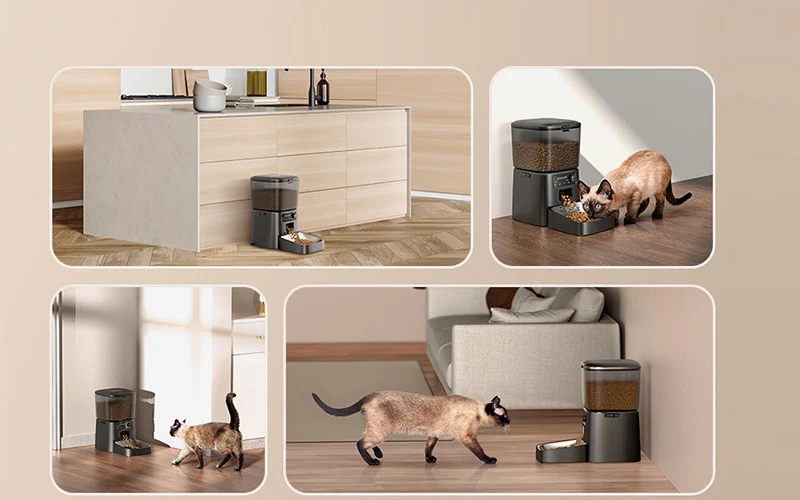
Smart feeders dispense measured portions at scheduled times. Connected models allow owners to create or modify meal schedules using a smartphone.
These devices may be useful for:
- Cats that prefer several small meals
- Owners with irregular working schedules
- Pets requiring portion control
- Multi-pet households
- Animals that need meals at precise times
Look for adjustable portions, an airtight food container, backup battery power, jam notifications, and parts that are easy to remove and wash. Some advanced feeders recognise a pet’s microchip or electronic collar tag and open only for that animal. This can prevent one pet from stealing another’s food.
Automatic feeding still requires human supervision. Owners must check that meals have been dispensed, clean the feeder regularly, and have a backup plan for power, Wi-Fi, or mechanical failures.
Portions should be calculated according to the food’s energy content, the animal’s weight, activity level, and health requirements. Pets with diabetes, kidney disease, allergies, obesity, or another medical condition may require a feeding programme created with a veterinarian.
3. Smart Water Fountains
Pet fountains continuously circulate water and may encourage some cats and dogs to drink more frequently. Smart models can provide water-level warnings, filter-replacement reminders, pump alerts, and information about drinking frequency.
Choose a fountain made from durable, easy-to-clean materials. Replacement filters should be affordable and readily available, while the pump should operate quietly enough not to frighten the animal.
A connected fountain’s measurements should be interpreted as general trends—not medical diagnoses. A sudden increase or decrease in drinking can be valuable information, but it may also indicate a health condition requiring veterinary assessment.
The fountain must still be cleaned regularly. Circulating water does not prevent hair, food, bacteria, or biofilm from accumulating inside the reservoir and pump.
4. Pet Cameras
A pet camera enables owners to monitor their dog or cat while they are at work, travelling, or away from home for a short period.
Depending on the model, features may include:
- Live video
- Night vision
- Movement detection
- Barking alerts
- Two-way audio
- Video recording
- Treat dispensing
A camera can help determine whether a dog is resting peacefully, barking at outside noises, pacing, damaging objects, or showing signs of separation-related distress. It can also confirm whether a pet sitter arrived or whether an automatic feeder operated correctly.
The camera should be installed somewhere the animal cannot chew its cable or knock it over. Owners should use a strong password, activate multifactor authentication when available, and install software updates promptly.
Treat-dispensing cameras can be entertaining, but treats must still be included in the animal’s daily calorie allowance. They should not replace direct play, training, or companionship.
5. Activity and Health Trackers
Wearable pet trackers can record movement, exercise, rest, and sleep patterns. Some advanced devices may also estimate behaviours such as scratching, licking, eating, or drinking.
These products are most valuable when they help identify changes from an individual animal’s usual routine. A sustained reduction in movement, for example, could provide useful information for the owner and veterinarian—particularly for a senior pet, an animal recovering from surgery, or a dog participating in a weight-management programme.
Nevertheless, tracker readings must be interpreted carefully. Movement can change because of weather, schedule changes, device placement, or reduced opportunities for exercise. Activity data cannot independently determine whether an animal is sick.
Texas A&M veterinary experts note that pet monitors may collect helpful information, but owners must understand a device’s limitations and discuss concerns with their veterinarian.
Signs such as breathing difficulties, collapse, severe pain, repeated vomiting, inability to urinate, or marked lethargy require professional attention—not monitoring through an application.
6. Automatic Litter Boxes
Self-cleaning litter boxes remove or separate waste after a cat uses the tray. Connected models may record visits, duration, and weight trends while notifying owners when the waste compartment needs emptying.
This information can help observant owners detect changes in elimination habits. Frequent visits, reduced urination, or changes in routine may warrant closer observation and veterinary advice.
However, automatic cleaning can remove waste before the owner notices diarrhoea, blood, or an unusual urine volume. The waste compartment must therefore still be inspected regularly.
Safety should be the main buying criterion. Select a properly sized model with reliable cat-detection sensors, an accessible emergency stop, and a mechanism that cannot trap the animal.
Introduce the new box gradually while keeping the familiar tray available. Some cats dislike enclosed spaces, unfamiliar litter, noise, or mechanical movement and should not be forced to use an automatic model.
7. Interactive Smart Toys
App-controlled balls, moving toys, automated laser devices, and programmable treat puzzles can provide physical activity and mental stimulation.
Choose toys that correspond with the pet’s:
- Size and strength
- Age and mobility
- Play style
- Temperament
- Chewing habits
Every component should be durable and too large to swallow. Battery compartments must remain securely closed, and toys should be checked frequently for loose pieces, exposed wires, cracks, or sharp edges.
Automated play should supplement human interaction. Dogs still need walks, training, social contact, and opportunities to sniff and explore. Cats need play sessions that let them stalk, chase, catch, and receive an appropriate conclusion or reward.
Laser play should finish with a physical toy or treat the cat can capture. Constantly chasing something impossible to catch can create frustration.
8. Smart Pet Doors
Smart pet doors use a microchip or electronic collar tag to admit authorised animals while keeping unfamiliar pets outside.
Some connected doors allow owners to:
- Create entry and exit schedules
- Lock the door remotely
- Receive movement notifications
- Monitor when the pet enters or leaves
- Assign different permissions to different pets
Before installation, consider the pet’s size, home security, weather protection, local wildlife, nearby traffic, and escape risks. A smart door should have a safe manual setting and continue performing its basic function if the internet connection fails.
Unrestricted outdoor access is not appropriate for every animal or location. Traffic, theft, fights, infectious diseases, toxic substances, and wildlife may make supervised outdoor time, a secure garden, or a cat enclosure safer.
How to Choose the Right Smart Pet Device
Begin with the problem you want to solve. An adventurous dog may benefit from a GPS tracker, while a microchip feeder could be more valuable in a household where one cat steals another’s food.
Before purchasing any smart pet product, consider:
- Comfort: Is it quiet, lightweight, and appropriate for your pet’s size?
- Safety: Could the animal chew, swallow, or become trapped in any component?
- Reliability: Will it still work during an internet or power failure?
- Ongoing expenses: Does it require a subscription, filters, batteries, or special accessories?
- Privacy: What information does the application collect?
- Maintenance: Is the device easy to clean, inspect, recharge, and repair?
- Support: Are replacement parts and customer assistance available in your country?
Smart technology works best alongside dependable everyday supplies. Barakaldo Vet Shop offers conventional essentials such as pet food, bowls, beds, collars, grooming products, parasite-control solutions, litter, and enrichment toys for dogs, cats, and smaller animals.
Final Thoughts
The best smart pet products are not necessarily the most complicated. A reliable GPS tracker can improve the chances of locating an escaped animal. A properly configured feeder can support a consistent routine, while a pet camera can help owners understand what happens when they leave home.
Activity trackers, smart fountains, and connected litter boxes may reveal useful changes, but their data must be combined with direct observation and veterinary expertise.
Choose technology because it supports your pet’s welfare or solves a recurring care problem—not simply because it connects to a smartphone. With careful selection, secure installation, regular maintenance, and plenty of personal attention, smart devices can become valuable additions to modern pet care.