

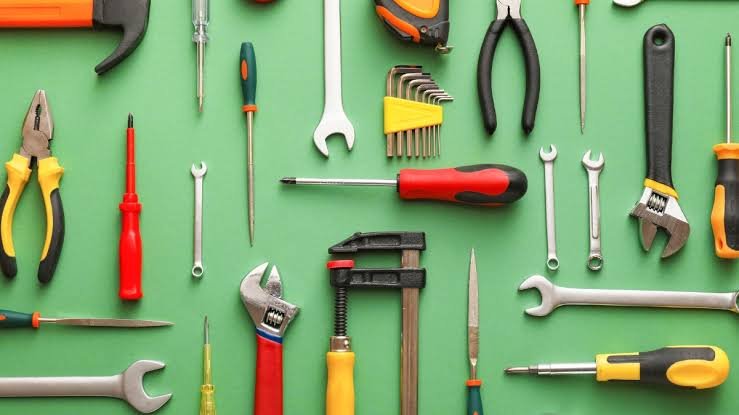
Whether you are assembling furniture, hanging shelves, repairing a loose cabinet door, or tackling a larger home-improvement project, having the right tools makes every job easier. A well-planned toolkit can save time, improve accuracy, and help you complete repairs safely.
You do not need to purchase every tool at once. Start with these ten essentials, which provide a dependable foundation for most household repairs and DIY projects.
1. Cordless Drill
A cordless drill is one of the most versatile tools you can own. It can drill holes in wood, metal, masonry, and plastic when fitted with the correct bit. It also works as a powered screwdriver, helping you assemble furniture or install shelves much faster than you could by hand.
When choosing a cordless drill, consider its voltage, battery capacity, weight, and torque settings. A compact 18V model is a practical option for many household projects. If possible, select a drill with two batteries so that one can charge while the other is being used.
2. Screwdriver Set
Even if you own a cordless drill, a dependable screwdriver set remains indispensable. Manual screwdrivers give you greater control when working with delicate fittings, tight spaces, and small screws that could be damaged by excessive power.
Your set should include several sizes of flathead and Phillips screwdrivers. Torx and Pozidriv screwdrivers are also helpful because these screw types are commonly found in furniture, appliances, and modern fixtures.
3. Claw Hammer
A claw hammer is essential for driving and removing nails. It can be used to hang pictures, repair wooden structures, remove old fittings, and complete basic carpentry projects.
Choose a balanced hammer that feels comfortable in your hand. A medium-weight model is usually sufficient for household work, while heavier hammers are more appropriate for demanding construction projects. A rubberized handle can provide additional comfort and control.
4. Tape Measure
Accurate measurements are the foundation of successful DIY work. A tape measure helps you determine whether furniture will fit, correctly position wall fixtures, estimate material requirements, and avoid costly cutting mistakes.
A tape measure of at least five metres should be suitable for most indoor projects. Look for clear markings, a reliable locking mechanism, and a sturdy blade that can extend without immediately bending. Always remember the golden DIY rule: measure twice and cut once.
5. Spirit Level
A shelf, cabinet, picture frame, or worktop can be securely installed and still look wrong if it is not level. A spirit level allows you to check horizontal and vertical alignment before fixing an object permanently.
A medium-sized level is versatile enough for many household tasks. Smaller magnetic levels are convenient when working with metal frames or in restricted spaces. Digital models provide precise measurements, but a traditional bubble level is reliable and affordable for most DIY enthusiasts.
6. Adjustable Wrench
An adjustable wrench can handle nuts and bolts of different sizes, making it particularly useful for plumbing repairs, furniture assembly, bicycle maintenance, and appliance installation.
Its movable jaw reduces the need to own a large collection of fixed-size spanners. Select a wrench with a smooth adjustment mechanism and minimal movement in the jaw. As your toolkit expands, consider adding both a small wrench for confined spaces and a larger one for tougher fittings.
7. Combination Pliers
Combination pliers allow you to grip, bend, twist, and cut different materials. They are helpful when working with wire, removing stubborn nails, holding small components, or tightening parts that are difficult to reach.
Look for pliers with strong jaws and comfortable, non-slip handles. Insulated handles can provide additional protection, but electrical work should only be attempted after safely isolating the power and confirming that the task is within your abilities.
8. Utility Knife
A sharp utility knife is useful for opening packaging, trimming wallpaper, cutting cardboard, shaping insulation, and scoring certain building materials. Models with retractable blades are convenient and safer to store.
Always cut away from your body and use an appropriate work surface. Replace dull blades promptly because a blunt blade requires more pressure and can be more dangerous than a sharp one.
9. Hand Saw
A hand saw is a dependable tool for cutting timber, boards, and other materials without needing electricity or battery power. It is affordable, portable, and suitable for occasional woodworking and gardening projects.
Choose your saw according to the materials you expect to cut. A general-purpose panel saw is a good starting point for wood, while specialized saws are more suitable for cutting metal, plastic, or fine joinery. Always secure the material before cutting and wear suitable eye protection.
10. Toolbox
Although it does not drill, cut, or fasten anything, a sturdy toolbox is essential for keeping your equipment organized and protected. Proper storage prevents tools from becoming lost, damaged, or left in places where they could cause accidents.
Choose a toolbox with a comfortable handle, secure latches, and compartments for smaller items such as screws, drill bits, wall plugs, and replacement blades. As your collection grows, a modular storage system or wheeled toolbox may offer greater convenience.
Build Your Toolkit Carefully
A useful DIY collection is built around quality and practicality—not simply the number of tools you own. Start with the equipment you are most likely to use, compare specifications, and choose tools that feel comfortable and appropriate for your projects. Retailers such as Kamody offer tools, accessories, storage solutions, and home-and-garden equipment across numerous categories.
Finally, do not overlook personal protective equipment. Safety glasses, suitable gloves, hearing protection, and a dust mask can be just as important as the tools themselves. With sensible preparation, safe working habits, and these ten essentials close at hand, you will be ready to approach everyday repairs and creative projects with greater confidence.